The Family Tree: the flocked animal families
Six households, four figures each — one shelf of the Honey Bee Acres line of flocked animal family playsets, with 6 boxes on it.
The animal families — the part of the line everything else is built around.
A Honey Bee Acres family is four flocked figures in one box: two grown-ups and two little ones, each with a poseable head, arms and legs. Pick a household and you have picked the cast of every story that follows. The Barksters are dogs, the McScampers rabbits, the Cheddars mice, the Cloverberrys cows, the Purringtons cats and the Cuddlesworths bears.
Families are sold individually, which is the whole point — you add a household when a child asks for one, not because a set forced it. The clothing is removable and interchangeable across every character in the line, so a rabbit can borrow a cow's overalls and nobody minds.
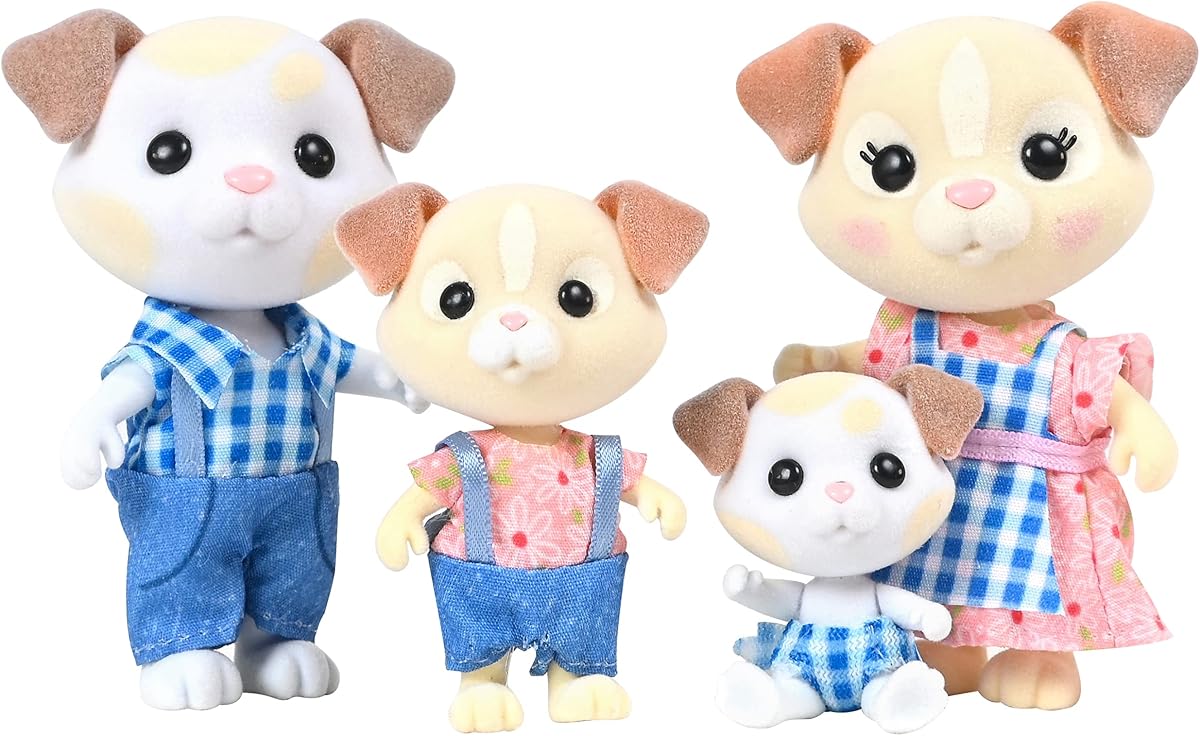 $9.944.8 out of 5 · 287 notesIn stock
Four dogs, one orchard morning.
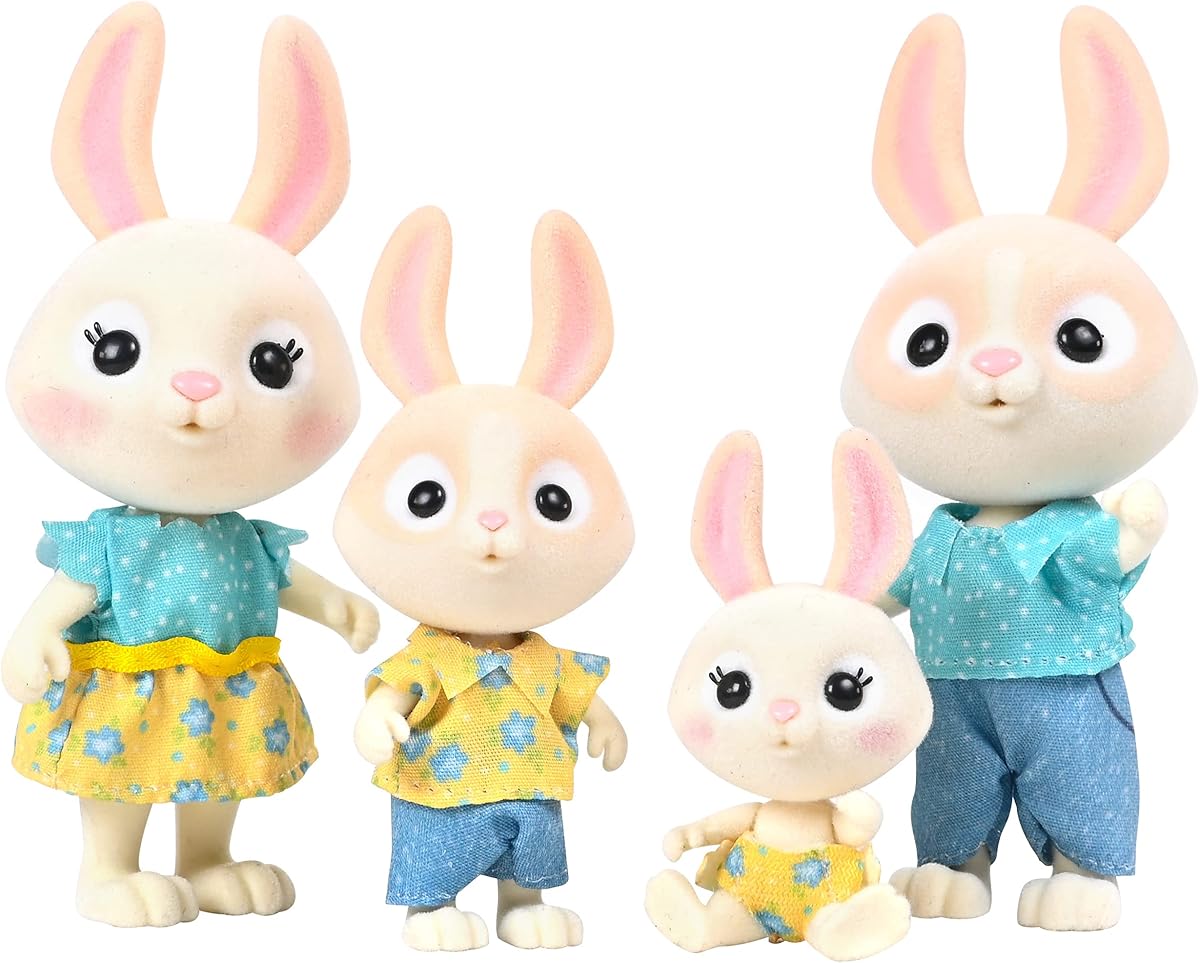 $9.944.7 out of 5 · 2226 notesIn stock
The rabbits who started most collections.
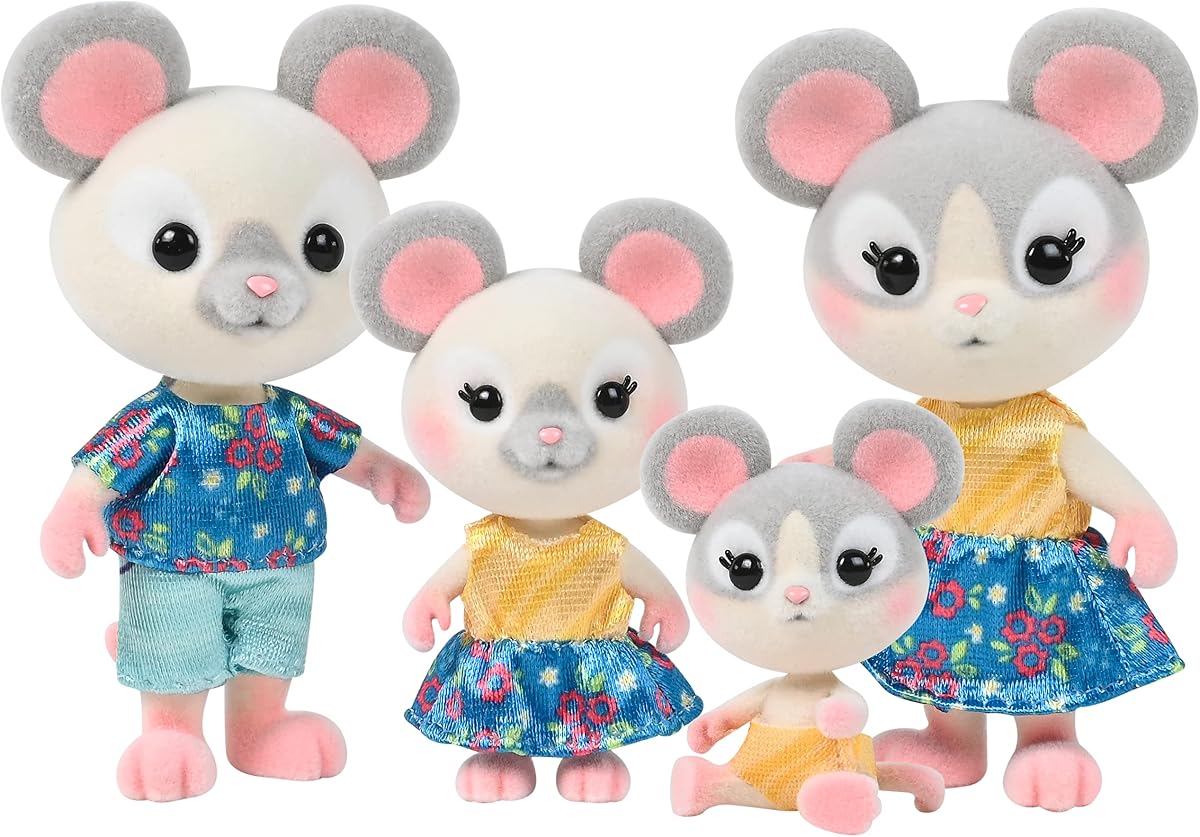 $12.084.7 out of 5 · 2226 notesIn stock
Bert, Bree, Phoebe and Nibbles.
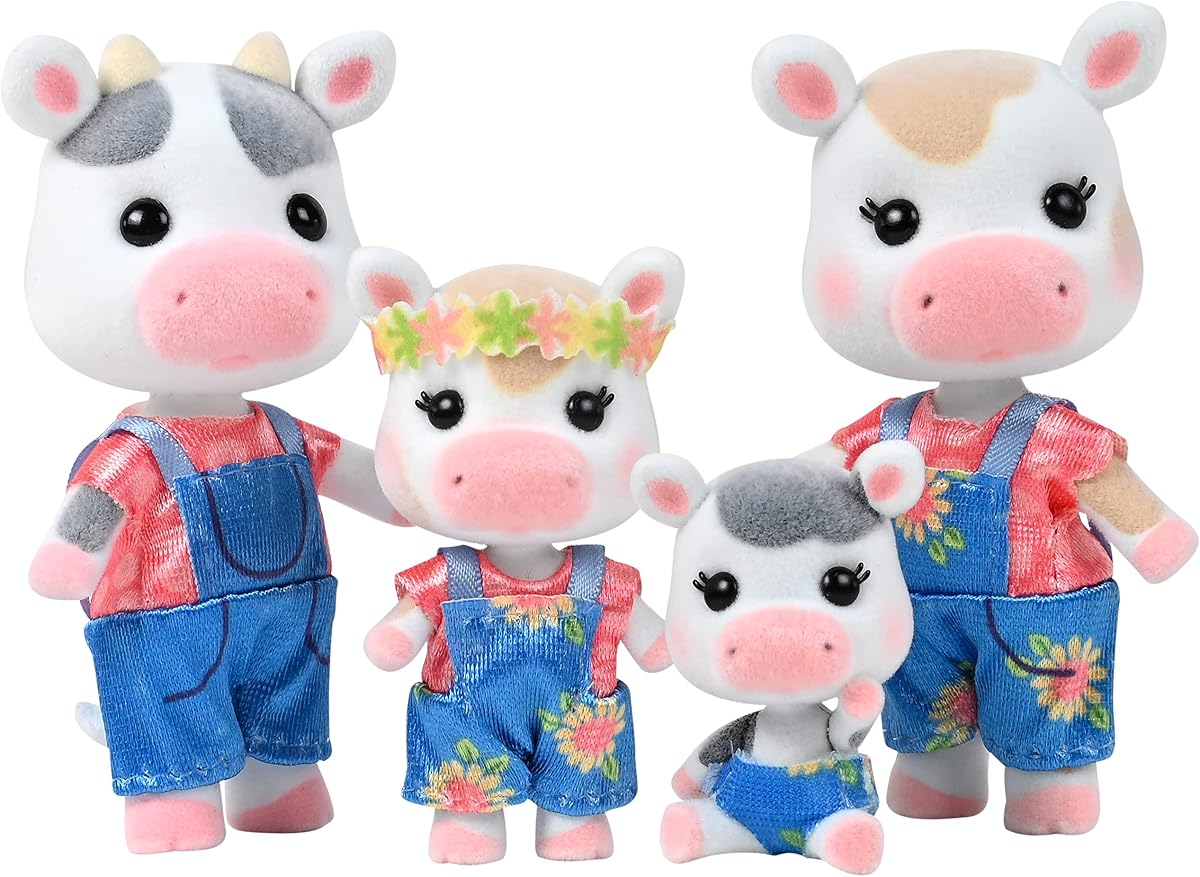 $12.884.7 out of 5 · 2226 notesIn stock
Ollie, Lily, Buttercup and Pepper.
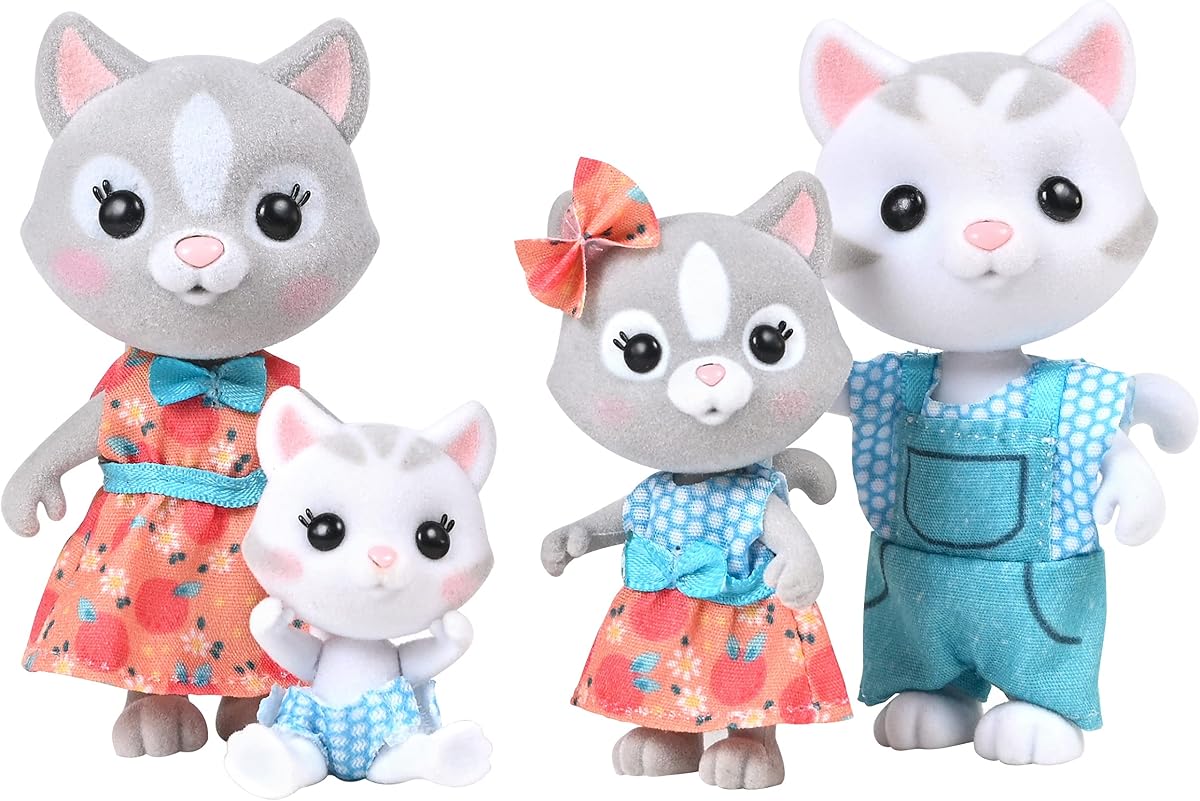 $9.944.7 out of 5 · 2226 notesIn stock
Fritz, Ella, Zoe and Rose.
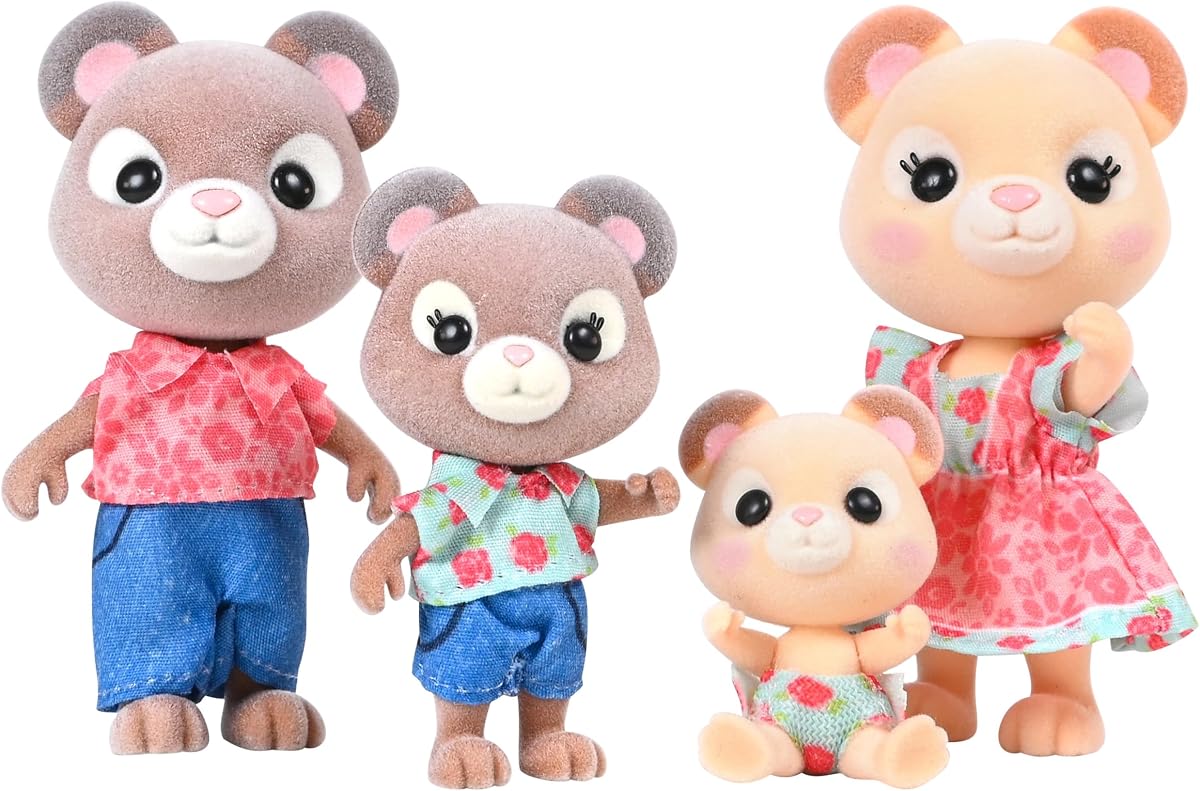 $15.994.7 out of 5 · 2226 notesIn stock
Wally, Cherry, Sasha and baby Toby.
How these flocked animal family playsets work together
Flocked means the hard plastic body is coated in short fibre, so the animal characters feel like suede rather than toys off a shelf. That finish is the oldest convention in this corner of the toy world: flocked animal families reached collectors from Japan decades ago and have barely changed in the years since, and Honey Bee Acres — made and distributed by Sunny Days Entertainment — keeps to it. Round ears, soft coats, clothing cut to fit a three-inch body.
Because every household is built to the same three-inch scale, the furniture and accessories from any other shelf here fit any family you pick. A cow can sit on a chair packed with the cottage; a mouse can push the garden cart. Nothing is keyed to one household, and nothing on this shelf needs a building to be worth opening — the figures are poseable enough to stand, sit and hold things on a bare rug.
Families are sold individually rather than as a numbered collection, so there is no sequence to follow and no gap to fill. Most shelves start with one household and grow sideways: a second family gives the first somebody to visit, and that is usually a bigger change to how the village gets played with than another building would be.
Short on shelf space? Start with one family and one small set. The village grows on its own after that.